Knowledge Hub

Expert insights, practical guidance, and industry updates from Excel Recovery Services.

Stay informed with expert commentary on insurance recoveries, third-party claims, liability management, and business debt recovery — designed for insurers, brokers, fleet operators, and financial decision-makers.

Frequently Asked Questions

Your Questions, Answered

Clear answers to common questions regarding ERS services, recovery processes, and fees.

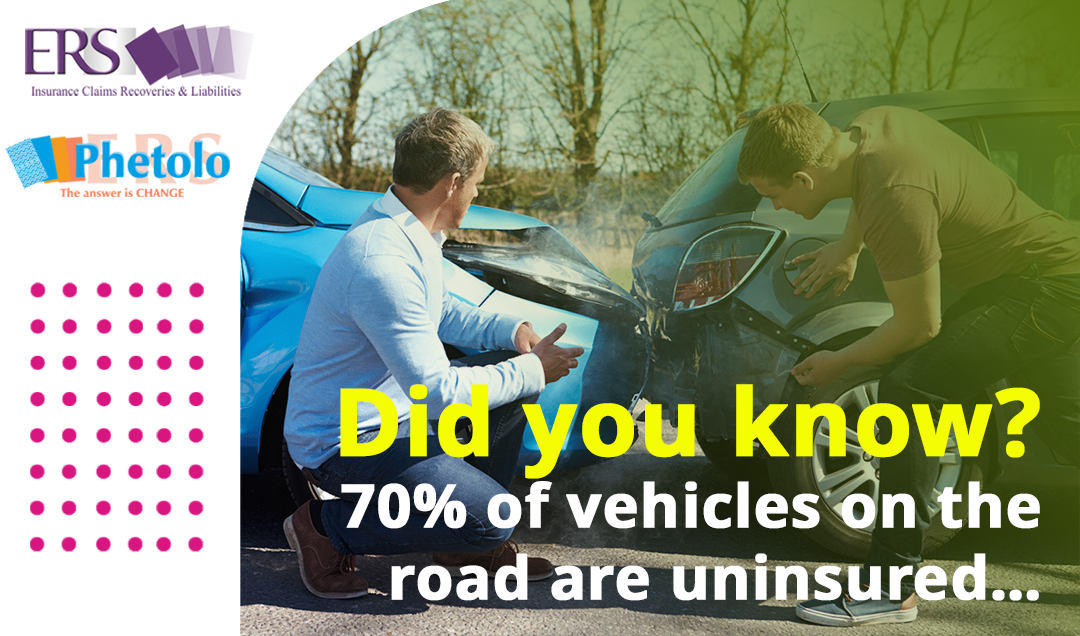
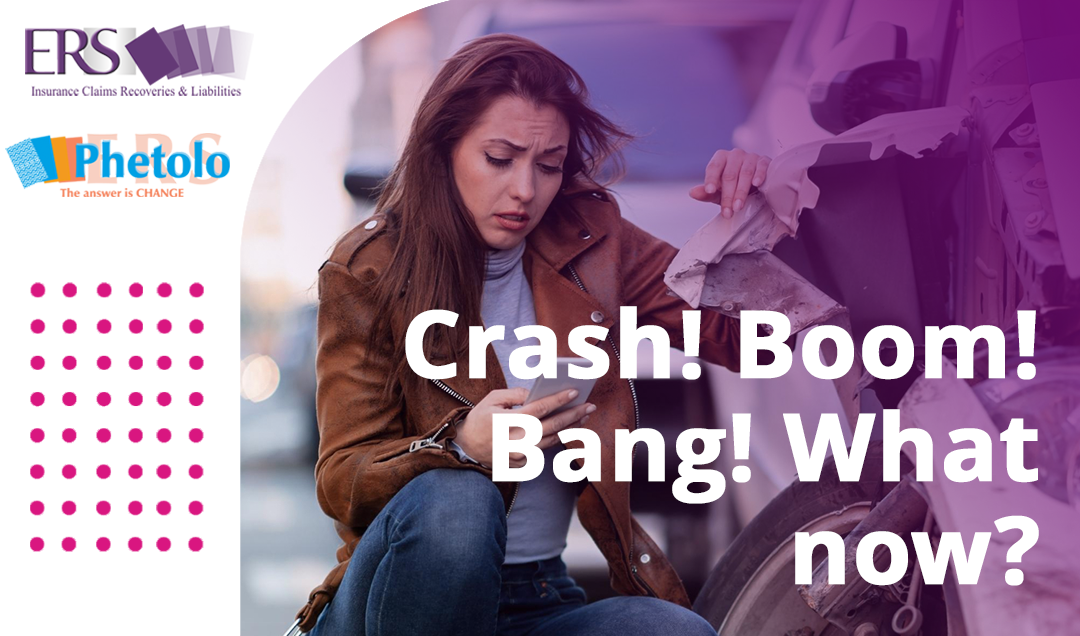
What to do after you’ve been involved in an accident?

Answer:

DO try to remain calm and assess the situation.

DON’T accept liability, even if you think you were the cause of the accident!

DO call an ambulance if somebody is seriously injured as well as the SAPS. Contact the SAPS especially if you suspect drunken driving or driving under the influence of any substance by the third party.

DON’T move the vehicles from the scene of the accident if there were serious injuries until the necessary measurements have been taken by the SAPS. If no injuries have been sustained, move the vehicles to avoid traffic congestion.

DO get hold of witnesses at the scene and make sure that you get contact detail from them. If possible keep them there until the SAPS arrive at the scene.

DO try to take photographs/videos of and on the scene of the accident.

DO make a note of the place where the accident occurred.

DO get as much information of the third party possible:

  • Registration of the vehicle
  • Make, model and colour
  • Name of driver & owner (if not the same)
  • Addresses of both parties
  • Telephone numbers of all parties
  • Insurance details if available

To download and print the accident form to be kept in your vehicle.

Click Here

DON’T allow anybody to tow your vehicle. If insured, make sure that it’s towed by an authorized towing company and taken to a repairer and NOT their yard. Some towing companies charge exorbitant fees to release the vehicle once at their yard.

DO report the incident to the SAPS within 24 hours if they did not attend to the accident. Try to obtain a copy of the accident report.

DO make a written statement within 12 hours after the accident has happened.

DO inform your insurance of an accident even if your vehicle had not been damaged.

He may. One avenue is using the Small Claims Court. www.justice.gov.za/scc/scc.htm. The limit of claims dealt with in the Small Claims Court is R20 000. Confirmation of the file being closed by his insurer must be obtained prior to proceeding with this action.

No, he cannot. This is the part of the claim for which he has agreed to carry the loss. It is however, understandable that an Insured will want to recover this if he was the innocent party in the accident. For more information with regards to this matter, refer to Short Term Insurance Ombudsman website: www.osti.co.za

No, the Insured may not do this. When instituting a claim with his Insurer, he subrogates his rights to the Insurer. The Insurer will endeavour to recover the entire amount from the guilty party, including the excess of the Insured. If this action is successful, the Insured will be compensated in due course. Any negotiations by the Insured may prejudice the rights of the Insurer and the Insurer can hold the Insured liable for all amounts paid towards the claim.

  • When the merit is in dispute. i.e. ERS cannot prove that the merit is in our clients favour;
  • If no eye witness is available to proof our merit (e.g. both parties allege that the traffic light was green in their favour to proceed);
  • If ERS cannot trace the third party;
  • If the third party is not in a financial position to pay for the damage;
  • If ERS cannot reach a settlement with the third party and we need to proceed with litigation and the quantum does not justify legal action;
  • If ERS cannot reach a settlement with the third party and once apportionment has been applied, the quantum will not justify legal action.

According to law, a third party claim prescribes after three years, unless legal action had been initiated. ERS endeavours to recover in as short a period as possible. We are however, dependant on the reaction and co-operation from the third party involved, whether an insurance company or individual. If a third party pays off the damage, it can take years.

The current ratio falls between 35% – 45% and we as a brand associates with this industry leading recovery success ratios.

At ERS we know the importance of receiving feedback and transparent and prompt real-time feedback through client access to ERS’s cloud based feedback system.

Our knowledgeable and skilled Recovery agents will negotiate the best settlement for you. However, if the need arises to litigate in court, ERS will manage this process as well. ERS is however successful in 95% of cases without having to take legal action.

This entails the negotiation of moneys due to a third party after an insured/driver caused damage to property. Negotiation will be done using the appropriate law and apportionment will be applied according to general accepted industry practice. A loss adjuster will be appointed, if the damage is extensive or if the need arises to establish a fair amount to be offered as settlement.

Our Fees are fully negotiable.

NB! We only earn commission on matters successfully finalised.

Making use of ERS’ services hold many direct and indirect benefits for clients:

  • A substantial saving in time and overhead costs.
  • ERS advises clients from their own extensive experience when to litigate, and when not.
  • Substantial saving on legal costs – you only pay when we are successful!
  • Peace of mind, knowing that specialists are handling important functions and actions.
  • Clients keep control of every process – but without being responsible for its execution.
  • Clients have 24/7 access to follow the progress on claims, through our state-of-the-art feedback system. They can also generate reports via the internet – a FREE service offered by ERS.
  • Loss ratio improves, and continuous fund flow is generated.
  • Better service to your clients (especially for Insurers, Underwriters, and Brokers).
  • An improvement in your recoveries and a supply of monthly statistics.

What is VAT?

VAT is a tax added to the cost of a product or service and is levied for purposes of generating revenue for the government. VAT is often referred to as a tax on consumption of goods or services, and is levied on the supply by a vendor of goods or services in the course or furtherance of any enterprise carried on by a vendor.

The key definition underlying VAT are contained in section 1 of the Value-Added Tax Act No. 89 of 1991 (The Act).

Inputs and outputs

The term “input tax” and “output tax” are defined in section 1 of the Act.  Put most simply, input tax is the tax that the vendor may claim back as a deduction from SARS, and output tax is the tax that a vendor levies on the supply of goods and services and which such vendor then pays over to SARS.

Why has the VAT option not been included in my settlement?

You would have received a tax invoice from the repairer/supplier.  As a VAT vendor, you may now claim this as an input tax from SARS.  Therefore all VAT which could be recovered or payed on this transaction has already been done.

Latest Blog Articles

Insights & Expert Commentary

Our blog provides practical, experience-driven insights for professionals involved in insurance recoveries and risk management.

ERS & Industry News

Stay Informed

Updates relating to Excel Recovery Services and the broader recovery and insurance landscape.

Pay It Forward

LIFE IS SO DIFFICULT – IS IT? We’ve got SO many things to be negative and worried about in South Africa.  We see the neglect

Read More »

ERS FUN

At Excel Recovery Services, we focus on Wellness in 2022. I believe having FUN is very much part of being well. Life has been or

Read More »

Ready to Improve Your Loss Ratio?

Stop absorbing losses that don’t belong on your balance sheet. Partner with ERS to recover outstanding damages, reduce write-offs, and protect profitability — all without financial risk.